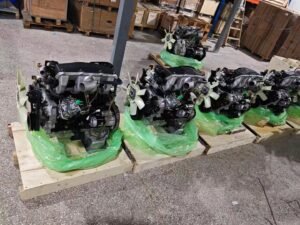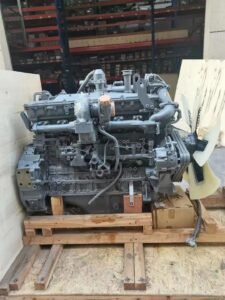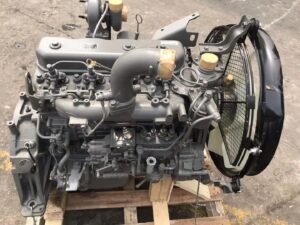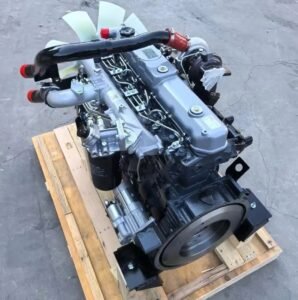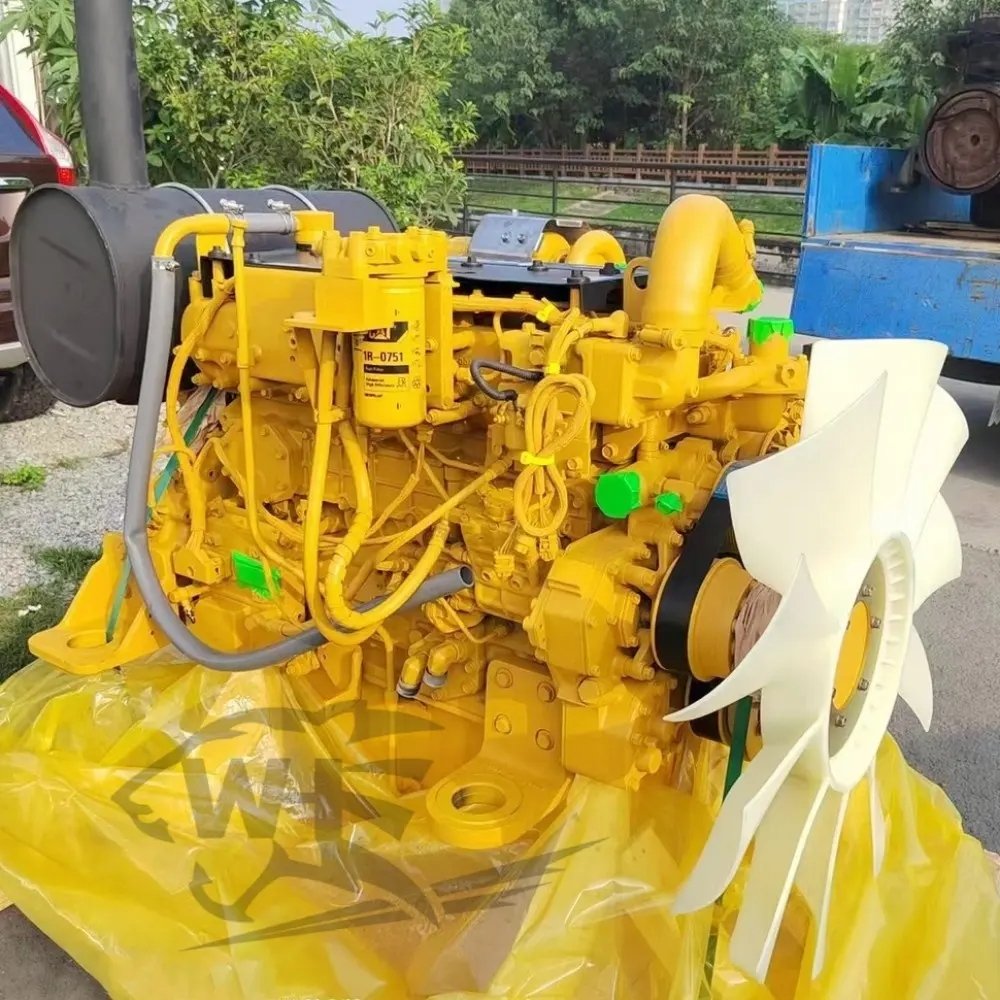
The Caterpillar C6.4 engine is a six-cylinder diesel engine that Cat built for medium-sized excavators and other heavy equipment. It is part of Cat’s ACERT technology family, which was introduced to meet stricter emission standards while keeping good power and fuel economy. You can find it in 320D and 323D excavators, as well as some forestry and road-building machines. The engine was produced from the late 2000s through the early 2010s. It went through several updates over that time. The basic block stayed the same, but the electronic controls and fuel systems changed across different variants.
This guide covers the key specifications, the equipment it powers, common problems, and what to check before buying a used one.
1. Basic Specifications
The C6.4 is an inline six-cylinder, four-stroke diesel engine. It has a cast iron block and a cast iron head. That design makes it strong and durable. The engine uses high-pressure common rail fuel injection. All versions are turbocharged and aftercooled. The engine belongs to Cat’s C-series engine family. The C6.4 is known for its good power density and fuel efficiency.
| Specification | Detail |
|---|---|
| Engine type | Inline 6-cylinder, 4-stroke diesel |
| Displacement | 6.4 liters (389–390 in³) |
| Bore × stroke | 102 mm × 130 mm (4.02 in × 5.12 in) |
| Fuel system | High-pressure common rail |
| Aspiration | Turbocharged and aftercooled |
| Cooling | Water-cooled |
| Emission standard | EU Stage IIIA / US EPA Tier 3 |
| Engine oil capacity | 30 liters (8 gallons) |
| Cooling system capacity | 25 liters (6.6 gallons) |
Power and torque ratings
The C6.4 came in different power levels for different machines. Here are the common ratings from Cat’s official specifications.
| Variant / Machine | Net Power | Torque | Application |
|---|---|---|---|
| 320D / 320D L | 138 hp (103 kW) at 2,000 rpm | Not specified | Standard excavator |
| 320D LRR | 148 hp (110 kW) at 2,000 rpm | Not specified | Reduced-radius excavator |
| 323D L | 150 hp (110 kW) at 2,000 rpm | 681 Nm at 1,500 rpm | Large excavator |
| 320D FM | 157 hp (117 kW) | Not specified | Forestry machine |
| 323D SA | 150 hp (110 kW) | Not specified | Special application |
| 321D LCR | 148 hp (110 kW) | Not specified | Compact radius |
The power numbers vary because different machines have different tuning. The 323D L typically gets the highest rating at 150 hp. The 320D FM has a forestry-specific tune at 157 hp. Some marine versions of the C6.4 are rated much higher—up to 335 to 505 horsepower at 3,400 rpm—but those are a different application. Always check the full model number on the engine plate before buying.
2. ACERT Technology – What It Means
The C6.4 uses Cat’s ACERT Technology. ACERT stands for Advanced Combustion Emission Reduction Technology. It is not one single part. It is a combination of technologies that work together.
The three building blocks of ACERT Technology are fuel delivery, air management, and electronic control. The engine uses a high-pressure common rail fuel system with multiple injection events. That means fuel is injected in several small pulses rather than one big shot. This shapes the combustion cycle and lowers combustion chamber temperatures. The result is fewer emissions and better fuel efficiency.
The C6.4 also features electronic controls that govern the fuel injection system. The ADEM A4 electronic module manages fuel delivery to get the best performance per liter of fuel used. It tracks engine and machine conditions while keeping the engine operating at peak efficiency.
ACERT Technology allows the C6.4 to meet EU Stage IIIA emission regulations while maintaining good performance and reliability. It also offers better fuel efficiency and reduced wear compared to older engines.
3. Which Machines Use the C6.4 Engine?
The C6.4 was used in several Caterpillar machines, primarily in the D-series excavator lineup.
Excavators
- 320D / 320D L: Standard 20-ton class excavator. Uses C6.4 ACERT, 138 hp. One of the most common applications.
- 320D LRR: Reduced-radius version of the 320D. Uses C6.4 ACERT, 148 hp. Designed for tight job sites.
- 320D FM: Forestry machine. Uses C6.4 ACERT, 157 hp. Forestry-specific tuning.
- 321D LCR: Compact radius excavator. Uses C6.4 ACERT, 148 hp.
- 323D L: 23-ton class excavator. Uses C6.4 ACERT, 150 hp. Larger machine with more power.
- 323D SA: Special application excavator. Uses C6.4 ACERT, 150 hp.
- 324D: Some 324D models also used the C6.4 engine.
- 325D: Some 325D models used the C6.4 engine.
Other equipment
- Certain mid-size wheel loaders: Some Cat wheel loaders used the C6.4.
- Pavers and road machinery: Some Cat pavers used the C6.4.
- Marine applications: Marine versions of the C6.4 were also produced, rated from 335 to 505 hp.
Important note: The C6.4 and C6.6 are different engines. The C6.6 is larger and was used in some 323D models. When buying a used engine, check the model plate carefully. Do not assume a C6.6 will fit where a C6.4 was.
4. Common Problems and Maintenance Tips
The C6.4 is generally a reliable engine. But it has a few known weak spots. Knowing them helps you avoid expensive repairs.
1. Injector and fuel system problems (most common)
This is the most frequently reported issue on the C6.4. The engine uses a high-pressure common rail fuel system. The injectors are precision components that operate at very high pressures. They are sensitive to fuel quality.
Common injector-related problems include:
- Injector circuit faults: Fault codes like 1-7 through 6-7 indicate an injector not working properly. Fault code 1172 indicates an injector solenoid circuit malfunction.
- Injector wiring harness damage: The harness routing near the valve cover experiences heat cycling and vibration. This can cause damaged wires or corroded connectors.
- Injector failure from poor fuel quality: Worn or contaminated injectors from high hours or bad fuel. Carbon buildup is common after 6,000+ hours.
- Fuel pressure problems: Rapid fuel pressure drop after priming suggests a leak or faulty check valve.
What to check when buying: Ask about the fuel system service history. Look for any active fault codes. Ask if the injectors have been tested or replaced. Check the fuel filters—dirty filters mean poor maintenance.
2. White smoke at idle
Some owners have reported white smoke at idle on the C6.4. One 320DL owner with a common rail C6.4 had a lot of white smoke at idle. An ET technician diagnosed a bad pump. After replacement, the problem persisted because one of the sensors on the pump did not read well. Another 320D had white smoke at idle that cleared up when RPMs increased. The cause was injector #1 being 7 psi lower than the rest.
White smoke can mean unburned fuel, incorrect injection timing, or coolant leaking into the combustion chamber. It can also be caused by a bad injector or fuel pump issue.
What to check when buying: Ask for a cold start video and watch for smoke at idle. A little white smoke on a cold start is normal. Thick white smoke that continues at idle is a red flag.
3. Rough running and misfire
The C6.4 can run rough or misfire. This is often caused by injector problems. Symptoms include rough idling with noticeable engine vibration and uneven RPM fluctuation, especially under load. Engine misfiring or running rough is noticeable at idle or under load.
What to check when buying: Listen to the engine at idle. It should run smoothly. Rough idle or shaking is a bad sign.
4. Hard starting and no-start conditions
Some C6.4 engines have starting problems. Common causes include:
- Low battery power or ignition system problems
- Clogged fuel filters or failing high-pressure fuel pump
- Air in the fuel system
- Injectors failing in the open position, preventing the engine from starting
What to check when buying: Ask for a cold start video. The engine should start within a few seconds. Extended cranking is a red flag.
5. Low power under load
Some owners report low power or no power on the C6.4. Possible causes include:
- Damaged injectors or incorrect injection timing
- Faulty governor or control linkage
- Fuel pressure issues
- Clogged air filter or intake restriction
What to check when buying: If you can see the engine under load, watch for black smoke. Black smoke under load can mean fuel system problems.
6. Cooling system problems
The C6.4 has a 25-liter cooling system capacity. Overheating can cause head gasket failure or cracked blocks. Common cooling system issues include improper maintenance and use of substandard coolant, which can cause corrosion damage.
What to check when buying: Look at the coolant. It should be clean, not rusty or oily. Check for coolant leaks around the water pump and hoses.
Maintenance checklist
- Change engine oil and filter regularly (30-liter capacity, 250-hour interval recommended)
- Change the fuel filters on time. Use genuine Cat filters.
- Check the air filter in dusty conditions. The radial seal air filter has a monitor that warns when dust accumulates above a preset level.
- Use clean, quality fuel. Bad fuel is the most common cause of HPCR pump wear.
- Check for fuel leaks in the return line system.
- Check for leaks. Oil, fuel, and coolant leaks all get worse over time.
- Listen for new noises. Do not ignore rough running or misfires.
5. Buying a Used C6.4 Engine: A Practical Guide
If you need to buy a used C6.4 engine, here are some steps to follow.
Step 1: Know which variant you need
Check your old engine’s model plate. The C6.4 came in different power ratings. A 320D engine makes 138 hp. A 323D L engine makes 150 hp. The tuning is different. The right one must match your machine. Also check if your machine uses a C6.4 or a C6.6. They are not interchangeable.
Step 2: Check the history
Ask where the engine came from. What machine was it in? How many hours? An engine from a 320D with 8,000 hours may be in a different shape than one from a 323D with 5,000 hours. Ask for service records if possible.
Step 3: Ask for a cold start video
This is the most important single check. Watch how it starts. A few seconds of cranking is normal. Extended cranking is a red flag. Thick white smoke at idle is a red flag. Blue smoke means burning oil. Black smoke under load means fuel trouble.
Step 4: Check for fault codes
Ask the seller if the engine has any active fault codes. Common codes include injector circuit faults (1-7 through 6-7) and fuel system codes. A clean code report is a good sign.
Step 5: Check the oil
Pull the dipstick. The oil should be dark brown or black. Milky oil means coolant in the oil. That is a head gasket or cracked block. Walk away. Fuel smell means injector seals may be leaking.
Step 6: Check the coolant
Look at the coolant in the radiator. It should be clean, not rusty or oily. Oily coolant means a head gasket problem. Rusty or dirty coolant means poor maintenance.
Step 7: Look for leaks and damage
Oil leaks around the valve cover or oil pan are red flags. Coolant leaks are red flags. A clean, dry engine is more likely to be a good engine.
Step 8: Ask about injector service history
This is critical for the C6.4. When were the injectors last tested or replaced? Have there been any injector fault codes? Has the high-pressure fuel pump been serviced? A seller who can answer these questions is a good sign.
Step 9: Ask the right questions
- What is the full engine model number and serial number?
- What machine did it come from?
- How many hours are on it?
- Can I see a cold start video?
- Are there any active fault codes?
- Have the injectors been tested or replaced?
- Has the high-pressure fuel pump been serviced?
- Have the fuel filters been changed regularly?
- Does it have any white smoke at idle?
- Does it come with a warranty?
Step 10: Watch for red flags
- No warranty
- Vague answers
- No videos
- Price too low
- White smoke at idle
- Injector fault codes present
- Milky oil on the dipstick
6. Parts and Availability
One reason the C6.4 remains popular is that parts are available. Because Cat built thousands of these engines for the 320D and 323D, there is a good supply of parts.
Common parts and service items
- Engine oil: 30-liter capacity, use Cat DEO or equivalent 10W-30 or 15W-40
- Oil filter: Genuine Cat spin-on type
- Fuel filters: Genuine Cat filters recommended. Dirty fuel is the most common cause of HPCR pump wear.
- Air filter: Radial seal type with double-layered filter core
- Coolant: 25-liter capacity, use Cat ELC or equivalent
- Injectors: High-pressure common rail injectors, available from Cat
- High-pressure fuel pump: Available from Cat
- Turbocharger: Available from Cat
- Gasket sets: Available from Cat
Using genuine Cat parts is always best. They fit right and last longer. There are also good aftermarket options, but be careful with cheap no-name parts for the fuel system. The high-pressure common rail system is precise. Cheap parts can cause expensive failures.
Engine serial number location
The engine serial number is typically found on the engine data plate, located on the left side by the injection pump or rocker arm cover. Serial numbers are also stamped on the engine block. Always verify the serial number matches the documentation before buying.
7. Why Buy from Yutian Machinery?
At Yutian Machinery, we know the C6.4 engine well. We have helped many customers find the right engine for their 320D, 323D, and other Cat excavators.
What we offer
- Expert help to choose the correct variant. Not sure if you need a 138 hp or 150 hp version? We will help you match your machine.
- Every engine is tested before it leaves. We check for injector problems, white smoke, and fault codes.
- Photos, videos, and test data provided. You get a cold start video and a running video.
- Clear warranty. We stand behind our engines.
- Proper packing for export. Your engine arrives safely.
- Support after the sale. Have a question later? We are here to answer.
What to expect from our engines
- Each engine goes through a start-up test. We check for unusual smoke, strange noises, and smooth idle.
- We check for injector fault codes and fuel system issues.
- We check for oil and coolant contamination.
- We provide a cold start video and a running video. You see the engine before you pay.
Ready to buy?
If you are looking for a reliable Cat C6.4 engine for your 320D, 323D, or other Cat machine, contact the Yutian Machinery team today.
- Email: [Your Email]
- WhatsApp / WeChat: [Your Contact]
- Website: [Your Website]
8. Final Thoughts
The Caterpillar C6.4 is a solid engine. It has powered 320D and 323D excavators around the world for many years. It is not the newest engine on the market, but it is proven and reliable. The ACERT technology gives it good fuel efficiency and lower emissions compared to older engines.
The most important thing to remember when buying used is the fuel system. The C6.4 uses a high-pressure common rail system. It is sensitive to fuel quality. Bad fuel kills injectors and pumps. Ask about the fuel system service history. Check for fault codes. Watch for white smoke at idle.
The second most important thing is to know your variant. The C6.4 came in different power levels. Make sure you get the right one for your machine.
With good maintenance, many C6.4 engines run for 10,000 to 15,000 hours before a major overhaul. If you need a C6.4, let Yutian Machinery help you find a good one. We know these engines. We test them. We stand behind them. You can buy with confidence.
Yutian Machinery – Your Trusted Partner in Power.