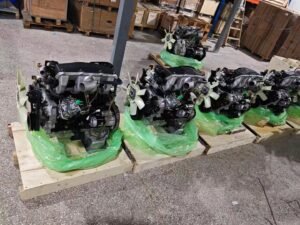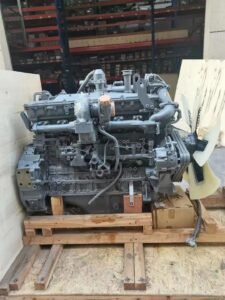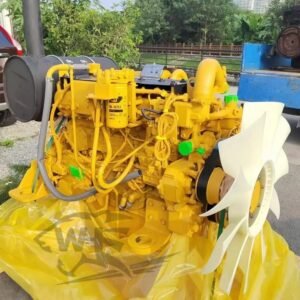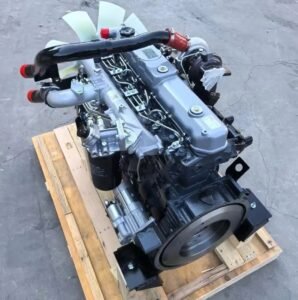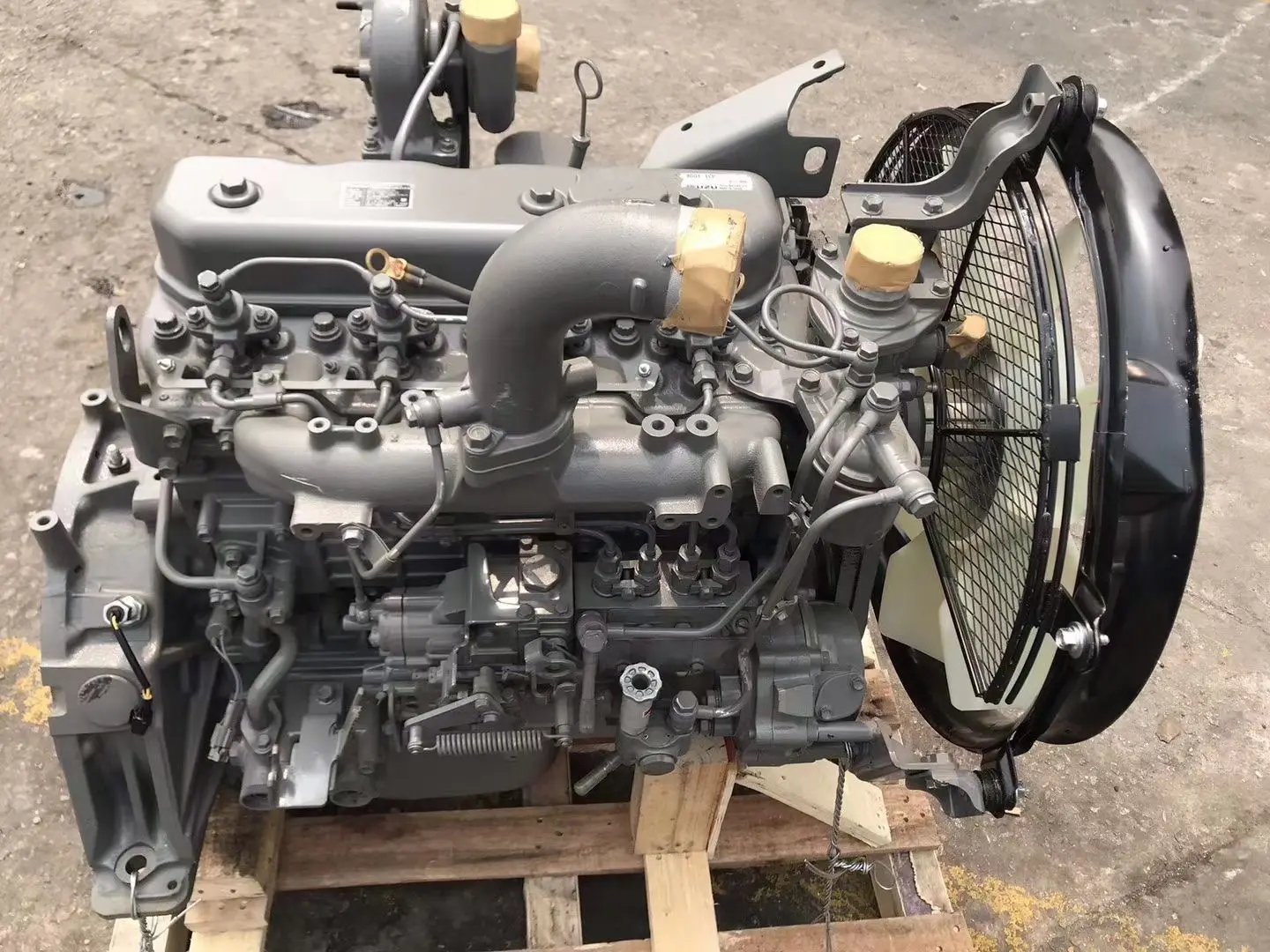
The Isuzu 4BG1 Engine is a four-cylinder diesel engine that Isuzu built for industrial and construction use. It is part of Isuzu’s B-series engine family, which includes both four-cylinder and six-cylinder versions. The 4BG1 has a reputation for being tough and reliable. You can find it in excavators, forklifts, generator sets, and various other types of equipment. The engine was produced over many years and went through several updates. This guide covers the key specifications, the equipment it powers, common problems, and what to check before buying a used one.
1. Basic Specifications
The 4BG1 is an inline four-cylinder, four-stroke diesel engine. It has a cast-iron block and a cast-iron head. That design makes it strong and durable. The engine uses direct fuel injection and comes in both naturally aspirated and turbocharged versions.
| Specification | Detail |
|---|---|
| Engine type | Inline 4-cylinder, 4-stroke diesel |
| Displacement | 4.3 liters (4,329 cc / 264 cid) |
| Bore × stroke | 105 mm × 125 mm (4.13 in × 4.92 in) |
| Compression ratio | 17:1 |
| Fuel system | Direct injection |
| Aspiration | Naturally aspirated (4BG1) or turbocharged (4BG1T) |
| Cooling | Water-cooled |
| Starter | 24V electric |
| Alternator | 40 amp |
| Air cleaner | Double element |
Power and torque ratings
The 4BG1 came in different power levels for different applications. Here are the common ratings.
| Variant | Power | Torque | Application |
|---|---|---|---|
| 4BG1 (naturally aspirated) | 56 hp at 1,800 rpm | Not specified | Generator sets |
| 4BG1T (turbocharged) | 85 hp (63 kW) at 2,200 rpm | 287 Nm (212 ft-lbs) at 1,600 rpm | Construction equipment |
| 4BG1T (turbocharged) | 98 hp at 2,200 rpm | Not specified | Light trucks |
| 4BG1T (turbocharged, higher output) | 109 hp (81 kW) at 2,300 rpm | Not specified | Pumps, winches, generators |
The power numbers vary because different applications have different tuning. The 4BG1T is the turbocharged version. It makes more power and torque than the naturally aspirated version. The turbocharged version is the most common in construction equipment. Some marine versions of the 4BG1T with an intercooler are rated up to 200 PS.
Physical dimensions
| Specification | Detail |
|---|---|
| Length | 837 mm |
| Width | 700 mm |
| Height | 843 mm |
| Dry weight | 360 kg |
2. Which Machines Use the 4BG1 Engine?
The 4BG1 was used in many different machines over its production run. Here are the main ones.
Excavators
- LBX (Link-Belt) 160LX: Uses the 4BG1T, makes 85 hp
- Hitachi EX100W / EX100WD-2: Uses the 4BG1
- Hitachi ZX200-3G: Uses the 4BG1 series engine
- JCB JS145 W: Uses the A-4BG1, 98 hp
- JCB JS160 W: Uses the 4BG1 TPA 03, 125 hp
- JCB JS 290 / JS 330: Uses the 4BG1
- Fiat Hitachi EX32: Uses the 4BG1
Forklifts
- Various forklift models use the 4BG1 engine
Generator sets
- Multiquip DCA-45SSIU2: Uses the 4BG1, 56 hp at 1,800 rpm
- Other industrial generator applications
Other equipment
- Pumps and winches: Industrial pump and winch applications
- Railway motor cars: Used in some railway applications
- Light trucks: Some light trucks use the 4BG1
The engine comes in different versions for different machines. The base block is the same, but the turbo, fuel system, and accessories can differ. When you buy a used 4BG1, you need to know which version fits your machine.
3. Common Problems and Maintenance Tips
The 4BG1 is generally a reliable engine. But it has a few known weak spots. Knowing them helps you avoid expensive repairs.
1. Engine vibration issues
One owner of an LBX 160LX with a 4BG1T reported a sharp vibration at lower RPMs. The vibration was causing the flywheel to rub the housing and hit the engine speed sensor. The engine ran fine otherwise. The owner replaced the hydraulic pump coupler and checked the flywheel, motor mounts, and front pulley. None of these fixed the problem. Other owners with similar Isuzu engines suggested checking the idler pulley or front pulley, which can slip internally. One owner fixed a similar vibration on a 4JB1T by rebuilding the injectors and pump.
What to check when buying: Listen to the engine at idle and low RPM. Feel for unusual vibration. If the engine shakes excessively at low speed, there may be a problem with the front pulley, injectors, or injection pump.
2. Abnormal engine noise
The 4BG1 workshop manual lists several types of abnormal engine noise and their causes.
- Gas leakage noise: Can be caused by loosely connected exhaust pipes, broken exhaust pipes, loose injection nozzles, or a damaged cylinder head gasket.
- Continuous noise: Can be caused by a loose fan belt, loose cooling fan, worn water pump bearing, defective alternator, or improperly adjusted valve clearance.
- Slapping noise: Can be caused by improperly adjusted valve clearance, damaged rocker arm, loose flywheel bolts, worn crankshaft and thrust bearings, or worn piston and cylinder liner.
What to check when buying: Listen to the engine at idle and under load. Any knocking, slapping, or continuous noise is a red flag. Ask if the valve clearance has been adjusted recently.
3. Cooling system problems
Overheating is a common problem on many diesel engines, including the 4BG1. Overheating can be caused by a failed thermostat, a failed water pump, a clogged radiator, or a loose fan belt.
What to check when buying: Look at the coolant. It should be clean, not rusty or oily. Check for coolant leaks around the water pump and hoses. Ask about the last time the cooling system was serviced.
4. Fuel system problems
The 4BG1 uses a direct injection fuel system. Common fuel system problems include dirty fuel filters, air in the fuel system, and injector issues. One owner with a 4JB1T fixed a vibration problem by rebuilding the injectors and injection pump.
What to check when buying: Ask about the fuel filter service history. Look for black smoke under load, which can mean fuel system problems.
5. Starting difficulties
Common starting problems on the 4BG1 include fuel supply issues, clogged filters, and faulty glow plugs.
What to check when buying: Ask for a cold start video. A few seconds of cranking is normal. Extended cranking is a red flag.
Maintenance checklist
- Change engine oil and filter regularly
- Change the fuel filter on time
- Check the air filter in dusty conditions
- Use clean fuel
- Check for leaks
- Listen for new noises
- Check valve clearance periodically
4. Buying a Used 4BG1 Engine: A Practical Guide
If you need to buy a used 4BG1 engine, here are some steps to follow.
Step 1: Know which variant you need
Check your old engine’s model plate. The 4BG1 came in different variants: 4BG1 (naturally aspirated), 4BG1T (turbocharged), A-4BG1, AA-4BG1T, and BB-4BG1T. Different variants have different power levels and accessories. The right one must match your machine.
Step 2: Check the history
Ask where the engine came from. What machine was it in? How many hours? An engine from a generator set with low hours may be in good shape. An engine from an excavator with high hours may be more worn. Ask for service records if possible.
Step 3: Ask for a cold start video
Watch how it starts. A few seconds of cranking is normal. Extended cranking is a red flag. Thick white smoke means coolant in the cylinders. Blue smoke means burning oil. Black smoke under no load means fuel trouble.
Step 4: Check the oil
Pull the dipstick. The oil should be dark brown or black. Milky oil means coolant in the oil. That is a head gasket or cracked block. Walk away. Fuel smell means injector seals may be leaking.
Step 5: Check the coolant
Look at the coolant in the radiator. It should be clean, not rusty or oily. Oily coolant means a head gasket problem. Rusty or dirty coolant means poor maintenance.
Step 6: Listen to the engine
If you can hear the engine run, listen carefully. Any knocking, slapping, or continuous noise is a red flag. The engine should run smooth without excessive vibration.
Step 7: Look for leaks and damage
Oil leaks around the valve cover or oil pan are red flags. Coolant leaks around the water pump or hoses are red flags. A clean, dry engine is more likely to be a good engine.
Step 8: Ask the right questions
- What is the full engine model number (e.g., 4BG1, 4BG1T, AA-4BG1T)?
- What machine did it come from?
- How many hours are on it?
- Can I see a cold start video?
- Does it have any unusual vibration at idle?
- Does it have any knocking or slapping noises?
- Have the injectors been tested or replaced?
- Has the injection pump been serviced?
- Does it come with a warranty?
Step 9: Watch for red flags
- No warranty
- Vague answers
- No videos
- Price too low
- Excessive vibration at idle
- Knocking or slapping noises
- Milky oil on the dipstick
5. Parts and Availability
One reason the 4BG1 remains popular is that parts are available. Isuzu built thousands of these engines for various applications, so there is a good supply of parts.
Common parts and service items
- Engine oil: Use good quality diesel oil
- Oil filter: Available from Isuzu and aftermarket suppliers
- Fuel filters: Available from Isuzu and aftermarket suppliers
- Air filter: Double element type
- Injectors: Available from Isuzu and Bosch
- Injection pump: Zexel or Bosch type
- Turbocharger: Available for 4BG1T models
- Gasket sets: Available from Isuzu
Workshop manuals
Workshop manuals are available for the 4BG1 and 4BG1T engines. These manuals cover maintenance, disassembly, inspection, repair, and reassembly. A good manual is essential for proper maintenance and repair.
Using genuine Isuzu parts is always best. They fit right and last longer. Good aftermarket options are also available, but be careful with cheap, no-name parts.
6. Why Buy from Yutian Machinery?
At Yutian Machinery, we know the 4BG1 engine well. We have helped many customers find the right engine for their excavators, forklifts, generators, and other equipment.
What we offer
- Expert help to choose the correct variant
- Every engine is tested before it leaves
- Photos, videos, and test data provided
- Clear warranty
- Proper packing for export
- Support after the sale
What to expect from our engines
- Each engine goes through a start-up test. We check for unusual smoke, strange noises, and a smooth idle.
- We check for excessive vibration at idle and low RPM.
- We check for oil and coolant contamination.
- We provide a cold start video and a running video. You see the engine before you pay.
Ready to buy?
If you are looking for a reliable Isuzu 4BG1 engine for your excavator, forklift, generator, or other equipment, contact the Yutian Machinery team today.
- Email: [Your Email]
- WhatsApp / WeChat: [Your Contact]
- Website: [Your Website]
7. Final Thoughts
The Isuzu 4BG1 is a solid engine. It has powered excavators, forklifts, generators, and other equipment for many years. It is not the newest engine on the market. But it is proven and reliable.
The most important thing to remember when buying used is to listen to the engine and feel for vibration. Excessive vibration at idle can be a sign of a problem with the front pulley, injectors, or injection pump. Knocking or slapping noises can mean worn bearings or pistons.
The second most important thing is to know your variant. The 4BG1 came in different versions. Make sure you get the right one for your machine.
If you need a 4BG1, let Yutian Machinery help you find a good one. We know these engines. We test them. We stand behind them. You can buy with confidence.
Yutian Machinery – Your Trusted Partner in Power.