Hey there! If you rely on Caterpillar equipment, you know their engines are built tough. But even the toughest engines can fail catastrophically if neglected or maintained improperly. These aren’t just stories; they’re real lessons from the field that cost owners dearly.
At Yutianmachinery, we’ve seen it all – and we’re here to help you avoid these nightmares. Here are three real Cat engine disasters, what went wrong, and how proper maintenance could have prevented them.
🔧 1. The $40,000 Lesson: counterfeit Oil Filter Wipes Out a Cat 3406C
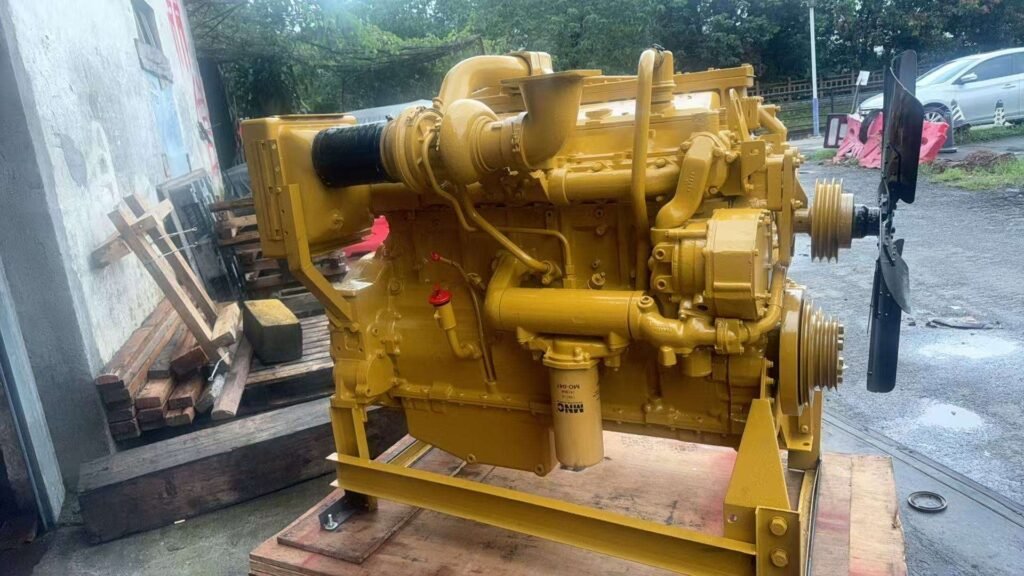
What Happened:
A Cat 3406C engine in a excavator suddenly seized during operation. Inspection revealed severe crankshaft scoring, connecting rod bearing failure (spun bearings), and cylinder liner scuffing. The root cause? A counterfeit oil filter.
The fake filter’s paper media lacked proper spacing, collapsed, and disintegrated.
Metal debris and shredded paper blocked critical oil passages, starving the engine of lubrication.
The result: complete engine destruction and a repair bill exceeding $40,000.
The Maintenance Solution:
Use Genuine Cat Filters: Counterfeit filters lack proper bypass valves, robust media, and anti-drainback seals. Insist on genuine Cat parts (e.g., part # 1R-0711 for many models).
Oil Analysis: Perform quarterly oil sampling to detect abnormal wear metals (iron, chromium) and contaminants.
Change Intervals: Follow Cat’s strict intervals (every 500 hours for many engines) using API CK-4 oil.
⚠️ 2. Neglect Destroys a Cat C9: From Whispers to a Catastrophic “Knock”
What Happened:
A Cat C9 engine in a 330D excavator began showing warnings: abnormal noise, intense vibration, loss of power, blue exhaust smoke, and rising fuel consumption. The owner ignored them.
Soon after, a loud bang was heard, and the engine locked up, refusing to turn over.
Teardown found a catastrophic connecting rod failure. The rod snapped, shattering the piston, severely damaging the cylinder head and liner, and cracking the engine block.
The crankshaft was bent beyond repair due to the force of the failure.
Root Cause & Maintenance Solution:
Cause: Extreme neglect. The air filter was clogged with dirt and torn, allowing abrasive dust into the cylinders. The oil filter was severely clogged and breached, and the oil was black and gritty. This caused severe piston ring and cylinder wear, leading to the final failure.
Solution:
Air Filter Checks: Visually inspect air filters daily in dusty environments. Replace seals and elements per schedule (every 1,000 hours or sooner). Use a vacuum gauge; if restriction exceeds 25 inches of water, replace it.
Don’t Ignore Symptoms: Unusual noises, smoke, or performance drops are cries for help. Investigate immediately.
🌡️ 3. Coolant Contamination: Oil Cooler Failure Triggers Overheat on a Cat 320D
What Happened:
A Cat 320D excavator suddenly overheated, with the coolant temperature gauge peaking. The operator found engine oil pooling around the radiator and emulsified oil-coolant mixture spraying from the header tank.
The culprit was a failed oil cooler core, allowing engine oil to leak into the coolant passages.
During an attempt to flush the system with a cleaning agent, the engine detonated, produced black smoke, and seized.
Disassembly revealed severely damaged main bearings and scored crankshaft journals.
The Maintenance Solution:
Coolant Testing: Use test strips monthly to check coolant nitrite levels and additive concentration.
Oil Cooler Service: Inspect the oil cooler during every major service (every 5,000 hours). Pressure test it to 35 psi to check for internal leaks.
Avoid Quick Fixes: Never use harsh chemicals to flush contaminated cooling systems. Disassemble and mechanically clean instead.
💎 The Common Thread: Prevention Beats Repair
These stories share a theme: proactive, disciplined maintenance prevents pain.
Invest in Genuine Parts: The few dollars saved on a fake filter cost $40,000 here.
Follow the Schedule: Cat’s maintenance intervals aren’t suggestions. They’re based on thousands of hours of engineering.
Train Your Operators: They are your first line of defense. Teach them to report abnormalities immediately.
Partner with Experts: Complex diagnostics (like ECM code reading) require Cat ET software and certified techs.