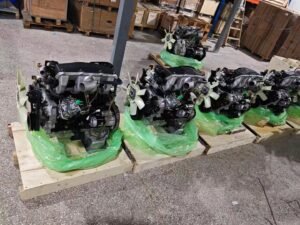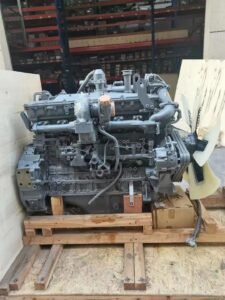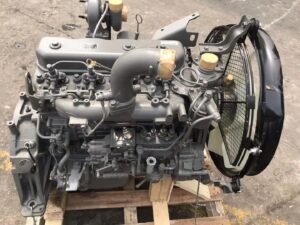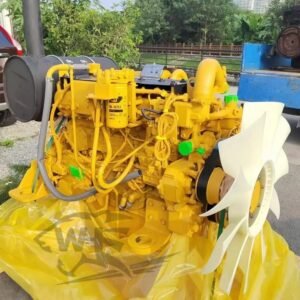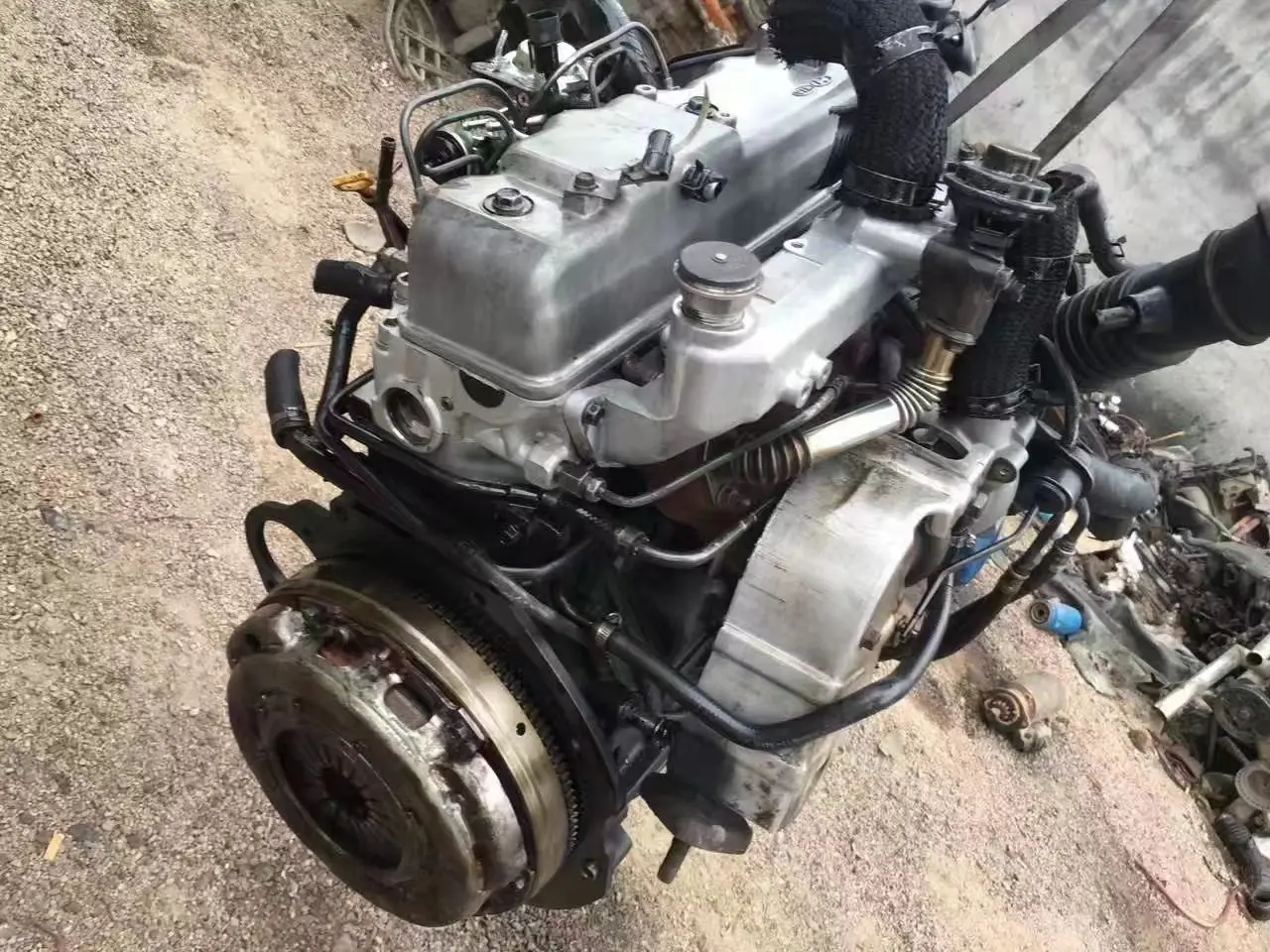
The Mitsubishi 4D56 engine is a four-cylinder diesel engine that Mitsubishi built for light trucks, SUVs, and commercial vans. It has a reputation for being simple and reliable. You can find it in the L200 pickup, Pajero SUV, Delica van, and many other vehicles. The engine was produced from 1986 to 2016. Over those three decades, Mitsubishi updated it several times. The basic block stayed the same, but the fuel system, turbo, and electronics changed.
This guide covers the key specifications, the vehicles it powers, common problems, and what to check before buying a used one.
1. Basic Specifications
The 4D56 is an inline four-cylinder, overhead cam diesel engine. It has a cast iron block and an aluminum cylinder head. That combination gives it strength without too much weight. The engine weighs about 193 kilograms.
Core specifications
| Specification | Detail |
|---|---|
| Engine type | Inline 4-cylinder, 4-stroke diesel |
| Displacement | 2.5 liters (2,477 cc) |
| Bore × stroke | 91.1 mm × 95.0 mm |
| Compression ratio | 21.0:1 (early); 17.0:1 (common rail); 16.5 (later) |
| Valves per cylinder | 2 (SOHC, 8-valve) or 4 (16-valve on later models) |
| Fuel system | Mechanical injection pump or common rail |
| Aspiration | Naturally aspirated or turbocharged |
| Cooling | Liquid-cooled |
| Camshaft drive | Belt-driven |
| Engine oil capacity | 6.5 liters |
Power and torque ratings
The 4D56 came in many different power levels. Early naturally aspirated versions made about 74 horsepower. Later turbocharged common rail versions made up to 178 horsepower. Here are the common ratings.
| Version | Power | Torque | Application |
|---|---|---|---|
| 4D56 (non-turbo, early) | 74 hp (55 kW) at 4,200 rpm | 142 Nm at 2,500 rpm | Early Delica, L300 |
| 4D56 (non-turbo, later) | 90 hp (67 kW) at 4,200 rpm | 197 Nm at 2,000 rpm | Delica, Pajero |
| 4D56T (turbo) | 105 hp (77 kW) at 4,200 rpm | 240 Nm at 2,000 rpm | Pajero, L200, Delica |
| 4D56 (common rail) | 116–178 hp | 314–441 Nm | Later L200, Triton |
The 4D56T is the turbocharged version. It makes more power and torque than the naturally aspirated version. The common rail versions from the late 2000s make significantly more power than the earlier mechanical injection versions.
Fuel consumption
For a 2004 Mitsubishi Pajero Sport with the 4D56 engine, fuel consumption is about 12.6 L/100 km in the city, 8.5 L/100 km on the highway, and 10.1 L/100 km combined.
Engine lifespan
With proper maintenance, the 4D56 can last about 400,000 kilometers. Some users have reported even higher mileage—over 300,000 miles with good care.
2. Which Vehicles Use the 4D56 Engine?
The 4D56 was used in many Mitsubishi vehicles over its three-decade production run. It was also used by Hyundai and Kia under license.
Mitsubishi vehicles
- Delica (L300 / L400 vans): Delica 3 (P03) from 1986 to 1999; Delica 4 (PA4) from 1994 to 2007
- L200 / Triton pickups: L200 2 (K10) from 1986 to 1996; L200 3 (K70) from 1996 to 2006; L200 4 (KB) from 2006 to 2016
- Pajero / Shogun SUVs: Pajero 1 (L040) from 1986 to 1991; Pajero 2 (V30) from 1990 to 2000; Pajero 3 (V70) from 1999 to 2006
- Pajero Sport (also sold as Challenger in some markets): Pajero Sport 1 (K90) from 1996 to 2008; Pajero Sport 2 (KH) from 2008 to 2016
Other brands
- Hyundai D4BA, D4BF, and D4BH diesel engines are based on the 4D56
- Hyundai H100 van and trucks
- Hyundai Galloper (based on the Pajero)
- Kia vehicles
The 4D56 was also used in generator sets, forklifts, and small marine applications.
3. Common Problems and Maintenance Tips
The 4D56 is generally a reliable engine. But it has a few well-known weak spots. Knowing them helps you avoid expensive repairs.
1. Timing belt and balance shaft belt failure (most critical)
This is the most important maintenance item on the 4D56. The engine has two belts: a timing belt for the camshaft and a separate balance shaft belt.
The balance shaft belt drives two counter-rotating shafts that reduce engine vibration. If the balance shaft belt fails, debris from the broken belt can fall into the camshaft drive area. That can contaminate the timing belt and cause it to fail. If the timing belt fails, the pistons hit the valves. That means bent valves, damaged pistons, and a destroyed cylinder head.
The recommended replacement interval is 90,000 to 100,000 kilometers or about five years. The balance shaft belt should be replaced at the same time as the timing belt.
What to check when buying: Ask when the timing belt was last changed. Ask about the balance shaft belt. A seller who knows about both belts is a good sign. If the seller does not know, be very careful.
2. Hydraulic belt tensioner failure
The 4D56 uses a hydraulic tensioner for the timing belt. Some owners skip replacing the tensioner to save money. That is a bad idea. The tensioner should be replaced every time the belt is replaced. If the tensioner fails, the belt loses tension and can jump timing. The engine will be damaged.
The tensioner locking pin should only be removed after the pulleys and belt are installed. After installation, the tensioner rod protrusion should be between 2.3 and 7.6 millimeters. The pivot bolt torque should be between 42 and 56 Nm. Too much or too little torque can cause problems.
What to check when buying: Ask if the tensioner was replaced with the last belt change. If the seller says “just the belt,” that is a red flag.
3. Black smoke and over-fueling
Black smoke is a common complaint on older 4D56 engines. The 4D56’s injection pump system needs to be maintained properly and calibrated frequently.
Black smoke means the engine is getting too much fuel or not enough air. Common causes include:
- Faulty injectors
- Faulty high-pressure pump
- Air intake restriction (clogged air filter)
- Low fuel pressure
- Retarded injection timing
What to check when buying: Watch the exhaust when the engine starts and revs. A little black smoke under hard acceleration is normal on older diesels. Thick black smoke at idle or light throttle is a problem. Injectors should be checked every 80,000 to 100,000 kilometers.
4. Injector problems
Injector issues are common on the 4D56. Symptoms include:
- Hard or extended cranking
- Rough idle when cold
- Rattly combustion sound (diesel knock)
- Excessive black or white smoke
- Increased fuel use
- Diesel smell around the engine bay
- Surging or hesitation under load
On the 4D56T, heat can cause the injector connector to expand and break contact. That leads to intermittent power loss.
What to check when buying: Ask if the injectors have been tested or replaced. Look for black smoke. Listen for rough idle. A smooth idle and clean exhaust are good signs.
5. Injection pump issues
The 4D56 uses a Zexel injection pump, which is a Bosch VE-style pump. Common problems include:
- Hard starting
- Surging
- Loss of power
- Fuel leaks
A tiny gauze filter under the main fuel feed fitting on the injection pump can get clogged and cause fuel starvation. Air in the fuel lines can also cause problems.
What to check when buying: Ask about the injection pump history. Has it been rebuilt? When? Look for fuel leaks around the pump. A dry pump is a good sign.
6. Overheating
Overheating is a common problem on old or high-mileage 4D56 engines. Overheating can be caused by:
- A failed thermostat
- A failed water pump
- A clogged radiator
- A slipping fan belt
- A cracked EGR cooler
What to check when buying: Look at the coolant. It should be clean, not rusty or oily. Check for coolant leaks around the water pump and hoses. Ask about the last time the cooling system was serviced.
Maintenance checklist
- Replace timing belt and balance shaft belt every 100,000 km or five years
- Replace the hydraulic tensioner with every belt change
- Change engine oil and filter regularly (6.5-liter capacity)
- Change the fuel filter regularly
- Check injectors every 80,000 to 100,000 km
- Use clean fuel
- Check for leaks
- Listen for new noises
4. Buying a Used 4D56 Engine: A Practical Guide
If you need to buy a used 4D56 engine, here are some steps to follow.
Step 1: Know which variant you need
Check your old engine’s model plate. Do you need a 4D56 or a 4D56T? Do you need mechanical injection or common rail? Different variants have different power levels and fuel systems. The right one must match your vehicle.
Step 2: Check the history
Ask where the engine came from. What vehicle was it in? How many kilometers? An engine from a Delica van with 150,000 km may be in better shape than one from a work truck with 100,000 km of hard use. Ask for service records if possible.
Step 3: Ask for a cold start video
This is the most important single check. Watch how it starts. A few seconds of cranking is normal. Extended cranking is a red flag. Thick white smoke means coolant in the cylinders. Blue smoke means burning oil. Black smoke under no load means fuel trouble.
Step 4: Check the oil and coolant
Pull the dipstick. The oil should be dark brown or black. Milky oil means coolant in the oil. That is a head gasket or cracked block. Walk away. Fuel smell means injection pump seals may be leaking. Check the coolant. It should be clean, not rusty or oily.
Step 5: Ask about the timing belt
This is the most important question for the 4D56. When was it last changed? Was the balance shaft belt changed at the same time? Was the hydraulic tensioner replaced? A seller who can answer these questions is a good sign.
Step 6: Look for leaks and damage
Oil leaks around the valve cover or oil pan are red flags. Coolant leaks around the water pump or hoses are red flags. A clean, dry engine is more likely to be a good engine.
Step 7: Ask the right questions
- What is the full engine model number?
- What vehicle did it come from?
- How many kilometers are on it?
- Can I see a cold start video?
- When was the timing belt last changed?
- Was the balance shaft belt changed at the same time?
- Was the hydraulic tensioner replaced?
- Have the injectors been tested or replaced?
- Has the injection pump been rebuilt?
- Does it come with a warranty?
Step 8: Watch for red flags
- No warranty
- Vague answers
- No videos
- Price too low
- Seller cannot tell you when the timing belt was changed
5. Why Buy from Yutian Machinery?
At Yutian Machinery, we know the 4D56 engine well. We have helped many customers find the right engine for their L200, Pajero, Delica, and other Mitsubishi vehicles.
What we offer
- Expert help to choose the correct variant
- Every engine is tested before it leaves
- Photos, videos, and test data provided
- Clear warranty
- Proper packing for export
- Support after the sale
What to expect from our engines
- Each engine goes through a start-up test. We check for unusual smoke, strange noises, and smooth idle.
- We check the timing belt condition and ask about service history.
- We check for oil and coolant contamination.
- We provide a cold start video and a running video. You see the engine before you pay.
6. Final Thoughts
The Mitsubishi 4D56 is a solid engine. It has powered L200 pickups, Pajero SUVs, and Delica vans for over thirty years. With proper maintenance, it can last 400,000 kilometers or more.
The most important thing to remember is the timing belt. Change it on time. Change the balance shaft belt at the same time. Replace the hydraulic tensioner. Do not skip these items. A broken timing belt means a destroyed engine.
The second most important thing is the fuel system. The 4D56’s injection pump needs regular maintenance. Use clean fuel. Change the fuel filter. Have the pump calibrated if it starts smoking or running rough.
If you need a 4D56, let Yutian Machinery help you find a good one. We know these engines. We test them. We stand behind them. You can buy with confidence.
Yutian Machinery – Your Trusted Partner in Power.