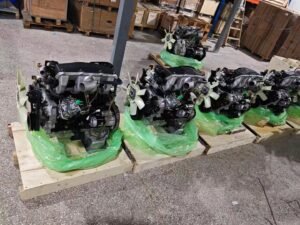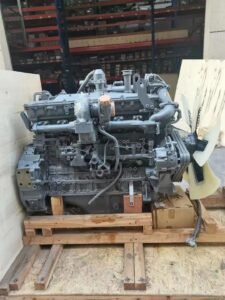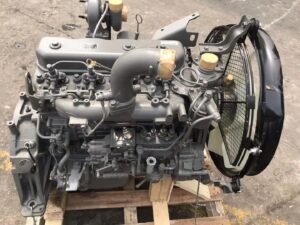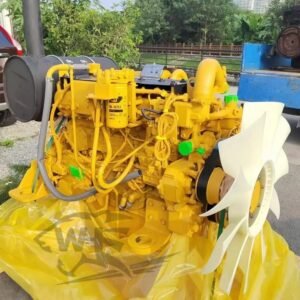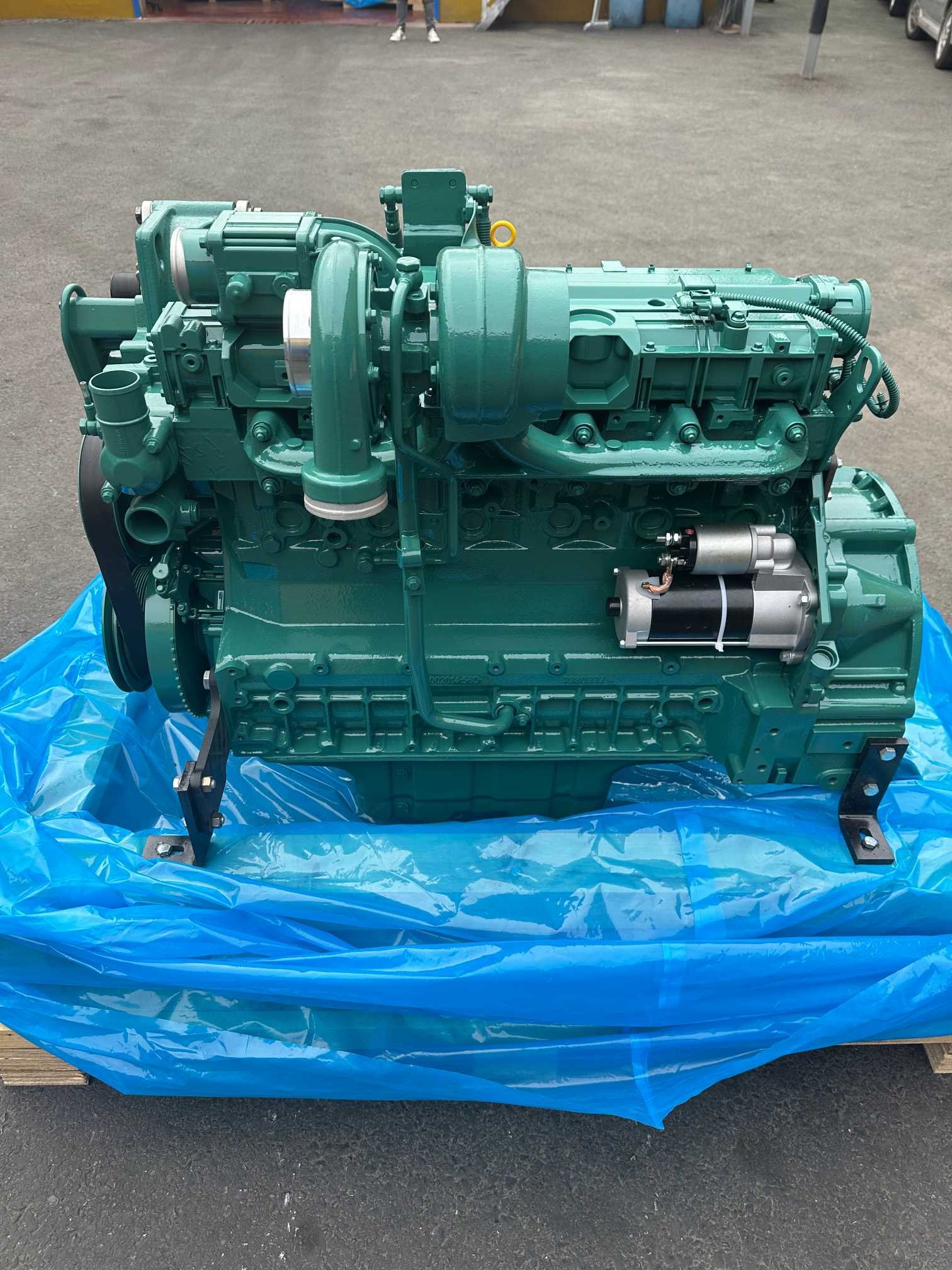
The Volvo D6D is a six-cylinder diesel engine. Volvo built it for mid-size construction equipment. People respect this engine for its high torque, low-end power, and solid reliability. You can find it in excavators, wheel loaders, graders, and other heavy machines from the mid-2000s. This guide covers the key specs, the machines it powers, common problems, and what to check before buying a used one.
1. Basic Specifications
The D6D is an inline six-cylinder, four-stroke, turbocharged diesel engine. Volvo built it with a cast-iron block and head. That design makes it strong and durable. The engine uses mechanical unit pump injection in its earlier versions, which is simpler than modern common rail systems. Some variants also have aftercooling, which cools the air from the turbo before it enters the cylinders. That helps the engine make more power.
| Specification | Detail |
|---|---|
| Engine Type | 6-cylinder, inline, 4-stroke diesel |
| Displacement | 5.5–5.98 liters (varies by version) |
| Bore and Stroke | 108–110 mm × 120–130 mm (different ratings exist) |
| Fuel System | Mechanical unit pump injection (early versions) / Electronic unit pump (later versions) |
| Aspiration | Turbocharged and aftercooled |
| Cooling | Liquid-cooled |
| Starter System | 24V |
| Dry Weight | Approximately 650–750 kg |
The D6D comes in different power ratings for different machines. The “LA” or other suffixes on the model number indicate the specific configuration, including the power level and emission standard. Here are some of the common ratings found in actual equipment:
| Rating Source / Machine | Power | Torque | Note |
|---|---|---|---|
| Volvo EC210B LC excavator | 119 kW (159 hp) gross, 107 kW (143.5 hp) net | 477.3 lb-ft (approx. 647 N·m) at 1,425 rpm | From Aucto specification data |
| Volvo EC210B (Chinese market rating) | 123 kW (167 hp) net | 632 N·m | 5.5L version with 105 mm bore |
| Volvo EW145B wheeled excavator | 105 kW (141 hp) | Not specified | SAE J1995 gross rating |
| Volvo L90E wheel loader | 122 kW (166 hp) gross | Not specified | D6D LA E2 version |
| Volvo EC350 excavator | 121 kW | 781 N·m | 6-cylinder, 108 mm × 130 mm |
| High-output industrial rating | Up to 160 kW (215 hp) at 2,200 rpm | Not specified | From aftermarket listing |
Note that the power numbers vary. Some of the differences come from how the engine is measured. Gross power is measured without the fan, alternator, and other accessories. Net power includes those losses. Net power is what actually reaches the transmission or hydraulic pump. So net power is usually about 10 percent lower than gross power. Some sources also list engine power at the flywheel. That is a third standard. Always know which measurement you are looking at. Different machines also have different tuning levels. An engine in a wheel loader may be tuned differently from the same engine in an excavator.
The D6D was designed to meet Tier 2 / Stage II emission standards. Some later variants meet Tier 3. When buying a used engine, check the emission rating on the engine plate. That will tell you where the engine can be legally used. Different engine models have different EPA/CARB/China emission certifications.
The engine uses a wet-type cylinder liner. That means the cylinder sleeves are removable. That is good for rebuilds. A worn engine can be re-lined rather than scrapped. The wet liner design also helps with cooling because coolant flows around the outside of the liners.
The engine has a high-strength alloy steel crankshaft and a wear-resistant cylinder block. Those parts make the engine capable of withstanding high cylinder pressures and long-term heavy loads. The connecting rods are also built strongly.
2. D6D vs. D6E: What Is the Difference?
The D6D and D6E are two versions of Volvo‘s six-cylinder engine platform. They share the same 5.7-liter displacement and basic block design. But they have different fuel systems. That difference matters for maintenance, parts cost, and performance.
| Feature | D6D | D6E |
|---|---|---|
| Fuel System | Mechanical unit pump injection (early) or electronic unit pump (later) | High-pressure common rail (Bosch) |
| Injection Pressure | Lower (around 1,000–1,500 bar) | Higher (up to 2,000 bar) |
| Electronics | Basic ECU with limited control | Advanced ECU with multiple injections and variable valve timing |
| Emission Standard | Tier 2 / Stage II | Tier 3 / Stage IIIA |
| Typical years | Early 2000s to around 2010 | Around 2010 onward |
| Parts availability | Still good | Very good |
The D6D is simpler. It uses a mechanical or basic electronic unit pump system. That makes it less sensitive to fuel quality than the D6E‘s common rail system. It is also easier to diagnose and repair in the field. You do not need a dealer-level computer to work on it.
The D6E is the more advanced engine. It has a Bosch common rail system with higher injection pressure. That gives better fuel economy and lower emissions. But it is more sensitive to dirty fuel. Injectors cost more. Repair costs are higher. Most D6Es were built after 2010. If your machine has a D6E, you need to be careful about fuel quality.
How do you tell them apart? The easiest way is to look at the engine model plate. It will say D6D or D6E. You can also look at the injectors. D6D injectors look like simple mechanical units. D6E injectors are part of a common rail system with high-pressure pipes between the pump and rail.
Which one is better? That depends on your situation. The D6D is simpler and cheaper to fix. The D6E is cleaner and more fuel-efficient. If fuel quality in your area is poor, the D6D is safer. If emission regulations are strict where you work, you may need a D6E.
Note that the two engines are not interchangeable without modifications. The mounting points may be different. The ECU and wiring harness are different. If you are replacing an engine, match the exact model number from your old engine‘s plate.
A key detail: the D6D engine uses a mechanical unit pump injection system, not a common rail. That system is tough. But it still needs clean fuel. The injection pump can wear out over time. When that happens, the engine may lose power or run poorly. Pump rebuilds are costly but possible. The D6E uses a Bosch common rail system, which is more sensitive to fuel quality.
3. Which Machines Use the D6D Engine?
The D6D engine was widely used in Volvo‘s mid-size construction equipment line from the mid-2000s. You can find it in several machine families.
Excavators (Crawler and Wheeled)
The D6D is most common in the B-series and early C-series Volvo excavators. Key models include:
- Volvo EC210B / EC210B LC: The D6D EFE2 is the standard engine for this popular excavator. In this application, the engine makes 119 kW gross (159 hp) with a peak torque of 477.3 lb-ft at 1,425 rpm. The EC210B is a 21-ton class excavator used widely in construction and road work.
- Volvo EC210B Prime: Uses the D6D engine with a Chinese market rating of 123 kW net power.
- Volvo EC240B: The larger 24-ton excavator also uses the D6D.
- Volvo EC350: Uses a higher-output version of the D6D.
- Volvo EW145B: This is a wheeled excavator. The D6D in this machine makes 105 kW (141 hp) and was produced from 2004 to 2009. The EW145B is good for road work and utility jobs because it can drive on roads between job sites.
- Volvo EW210B / EW210C: Wheeled excavators that also use the D6D.
The engine code with EF or EA prefixes (like D6D EFE2, D6D EAB2, D6D EJE2) refers to specific emission and configuration variants. The D6D EFE2 is common in EC210B excavators. The D6D EAB2 is another variant that makes 109 hp (81 kW) net at 1,900 rpm, with 498.8 N·m of torque at 1,450 rpm.
Wheel Loaders
- Volvo L70E: The E-series loaders use the D6D.
- Volvo L90E: Uses the D6D LA E2 version. This engine makes 122 kW (166 hp) gross. The L90E is a 15 to 16-ton loader used in gravel pits, recycling facilities, and construction sites.
- Volvo L110E / L120E: Larger loaders that also use higher-output D6D variants.
Graders
- Volvo G930: This motor grader uses the D6D engine. Graders need high torque at low RPM for blade work. The D6D‘s torque curve fits that need.
Other Equipment
- Generator sets: The D6D is used in industrial generator applications as a prime or standby power unit. The generator version may have a different governor setup and run at 1,500 or 1,800 RPM.
- Marine engines: Some smaller workboats and commercial vessels use the D6D as auxiliary or main propulsion. But marine D6D engines are less common than the industrial versions.
- Forklifts and material handlers: Some heavy forklifts use the D6D.
When buying a used engine, ask what machine it came from. That will tell you about the hours and work patterns. An engine from a wheel loader may have higher hours but a lower average load than one from an excavator used in rock digging.
4. Common Problems and Maintenance Tips
The D6D is generally a reliable engine. But it has a few known issues. Knowing them helps you avoid expensive repairs.
1. Injector Nozzle and Tip Failure
This is one of the most common problems reported on the D6D. The injector tip can crack or blow off entirely. On a forum, one mechanic reported that a blown injector tip is “not uncommon, especially if you have had water in the fuel.” Another case described smoke that looked like “burnt oil and unburnt fuel,” with a fuel smell coming from the muffler under load. That is a classic sign of an injector that is over-fueling or leaking.
The cause is often water or dirt in the fuel. The D6D uses a mechanical unit pump system. It is tougher than common rail, but it is not indestructible. Water causes the injector nozzles to crack. Dirt wears out the precision parts inside the injector.
Signs of injector problems include black smoke, rough idle, engine shaking, loss of power, hard starting, and increased fuel consumption. One Chinese forum user described the exact symptoms: black smoke, shaking, slow engine response under load, missing on one or more cylinders, and even failure to start.
What to check when buying: Ask about the fuel system history. Look for black smoke on cold start or under load. If you can, have a fuel injection shop test the injectors. That costs less than buying new injectors blind.
How to maintain: Use clean fuel. Change the fuel filter on time. Many failures come from dirty fuel or poor filter maintenance. If you are in an area with bad fuel, consider adding a secondary fuel filter or using a fuel polishing system.
2. Boost Leaks and Intake Manifold Gaskets
The D6D has individual intake manifold gaskets for each cylinder. There are six of them. Over time, these gaskets can fail or blow out. That causes a boost leak. The engine loses power and may run rough.
One mechanic shared a story of an EC210B that the owner thought needed injectors. The actual problem was a major boost leak from several intake manifold gaskets that had failed. The mechanic suggested checking the area where the manifold meets the head for signs of oil residue or gaskets hanging out.
What to check when buying: Look for oil stains around the intake manifold joints. A boost leak often leaves a telltale oily mess. If you can pressurize the intake system with compressed air and soapy water, you can find leaks that way.
3. Turbocharger and Rubber Connector Issues
The D6D‘s turbocharger is connected to the intake system with rubber connectors. These can slip off or crack. An owner of an EC290BLC reported that his engine was down on power. The problem turned out to be a rubber connector on the bottom of the turbo that had slipped off. Reconnecting and tightening it fixed the issue.
Signs of turbo or intake leaks: low power, black smoke, unusual hissing sounds under load.
4. Hard Starting and Fuel System Air
Hard starting on the D6D can have several causes. The operator‘s manual lists these: discharged battery, loose connections or open circuits, tripped fuse, lack of fuel, fouled fuel filter, air in the fuel injection system, or water and contaminants in the fuel.
The D6D‘s fuel system is sensitive to air. If you run out of fuel or change the fuel filter, you must prime the system correctly. Air in the lines prevents the injection pump from building pressure. That means no fuel gets to the injectors. The engine will crank but not start.
What to check when buying: Ask for a cold start video. A good engine should start within a few seconds of cranking. Hard starting or extended cranking is a red flag.
5. Cooling System and Coolant Quality
The D6D is a turbocharged, aftercooled engine. That means it relies on good cooling. Overheating can cause head gasket failure, warped cylinder heads, or cracked blocks. In marine applications, saltwater corrosion is an additional risk.
What to check when buying: Look at the coolant. It should be clean and green or red. Rusty or oily coolant means poor maintenance. For marine engines, check the heat exchanger for signs of salt corrosion or clogging.
6. General Maintenance Tips
To keep a D6D running well, follow these basic steps:
- Change engine oil and filter at the recommended interval. Use the right grade (typically 15W-40 diesel oil).
- Change the fuel filter on time. In dirty fuel conditions, change it more often.
- Check the air filter regularly. In dusty work environments, check it daily.
- Use clean fuel. Bad fuel kills injectors. If you cannot guarantee good fuel, add extra filtration.
- Check for leaks. Oil, fuel, and coolant leaks all get worse over time. Fix them when you find them.
- Listen to the engine. If you hear new knocking, hissing, or whining noises, investigate early.
A well-maintained D6D can go many thousands of hours before a major overhaul. Many EC210B units with D6D engines have logged over 10,000 hours with good care. Neglect is the real killer.
The D6D uses a 24V starter and electrical system. That is common in larger construction equipment. Many machines have an 80-amp alternator. When buying a used engine, make sure the alternator and starter are present and working, unless you plan to swap your old ones over.
5. Buying a Used D6D Engine: A Practical Guide
If you need to buy a used D6D engine, here are some steps to follow.
Step 1: Identify Your Engine Variant
Look at your old engine‘s data plate. Get the full model number. Examples: D6D EFE2, D6D LA E2, D6D EAB2, D6D EJE2. Each variant has different tuning and accessory configurations. If you cannot read the plate, take a photo. A good seller can identify the variant from the photos.
Step 2: Check the History
Ask where the engine came from. Was it in an EC210B excavator? An L90E wheel loader? A generator? Also, ask how many hours it has run. An engine from a wheel loader with 8,000 hours but gentle use may be better than an engine with 4,000 hours of rock-digging duty. Ask for service records if possible.
Step 3: Ask for a Cold Start Video
This is the most important single check. A cold start video shows how the engine starts from dead cold. Watch for:
- How long does it take to start? A few seconds is normal. Extended cranking is a red flag.
- White smoke. A little white smoke on a cold day is normal (that is, condensation and unburned fuel). Thick, persistent white smoke means coolant may be leaking into the cylinders.
- Blue smoke means the engine is burning oil. That is a bad sign.
- Black smoke under no load means the fuel system may be off.
Step 4: Check the Oil and Coolant
Pull the dipstick. The oil should be dark brown or black. Milky oil means coolant in the oil. That is a head gasket or a cracked block. Walk away. Also smell the oil. If it smells like diesel fuel, the injection pump seals may be leaking. That is also a problem.
Check the coolant in the radiator. It should be clean and green or red. Oily coolant means a head gasket problem. Rusty or dirty coolant means poor maintenance.
Step 5: Look for Leaks and Damage
Look at the engine exterior. Oil leaks around the valve cover, oil pan, or front seal are red flags. Coolant leaks around the water pump or hoses are red flags. A clean, dry engine is more likely to be a good engine.
Check the turbocharger. Look for oil residue in the intake piping. A small amount may be normal. A lot is a problem. If you can, check the turbo shaft for play. A little side-to-side play is normal. In-and-out play is bad.
Step 6: Ask the Right Questions
- What is the full engine model number?
- What machine did it come from?
- How many hours are on the engine?
- Does it start and run? Can I see a video?
- Are there any known issues with the injection pump or injectors?
- Does it come with a warranty? How long?
- Do you have the service records?
- Will you send packing videos before shipping?
Step 7: Watch for Red Flags
- “No warranty, sold as-is” is a red flag. A good seller will stand behind their engine, at least for a short period.
- Vague answers to basic questions. If the seller cannot tell you the hours or the machine’s origin, be careful.
- No videos or photos. A seller who refuses to show the engine running is hiding something.
- Price is much lower than the market average. If it sounds too good to be true, it probably is.
A seller who provides videos, answers questions clearly, and offers a warranty is worth paying more for. The cheapest engine is not always the best deal. You may save money upfront, but pay more in repairs later.
One more tip: if you are looking for a D6D that was used in a rice planter in Japan, those engines often have extremely low hours. In Japan, transplanters and harvesters are used only a few times a year. Some of those engines have only a few hundred hours. They are often clean and in great shape. That is a good place to look for a low-hour engine.
Also note that the D6D and D6E share many parts, like the block and crankshaft. But the cylinder head, injection system, and ECU are different. Do not buy a D6E fuel system to put on a D6D. It will not fit. Use the correct parts for your engine family. Using the correct parts and good maintenance helps the engine last longer.
6. Parts and Availability
One reason the D6D remains popular is that parts are still available. You can find both genuine Volvo parts and quality aftermarket options. Because Volvo built thousands of these engines for the EC210B and other popular machines, there is a good supply of parts globally.
Common Part Numbers and Maintenance Kits
Volvo genuine replacement parts are available from many sources. For example, there is a complete maintenance kit for D6D engines that includes: oil filter (Volvo P/N: 21810438), diesel fuel filter (Volvo P/N: 21634485), and V-belt (Volvo P/N: 966251). Other service parts available include water pumps, thermostats, and injector nozzles.
For a major overhaul, rebuild kits include pistons, rings, liners, bearings, and gasket sets. Genuine Volvo parts are the safest choice, but there are good aftermarket options from European and Chinese manufacturers.
Workshop Manuals
A factory workshop manual is essential for proper repair. The manual contains specifications, torque values, and step-by-step procedures. It is designed for professional mechanics but can also be used by advanced owners with good mechanical skills. A good manual can save you thousands in repair costs.
Because the D6D and D6E are similar engines, some repair shops work on both. But the injection systems are different, so not every mechanic who knows the D6D can work on the D6E. The D6E common rail system requires dealer-level diagnostic tools. Keep that in mind when choosing a mechanic.
7. Why Buy from Yutian Machinery?
At Yutian Machinery, we know the Volvo D6D engine well. We have helped many customers find the right engine for their EC210B excavators, L90E loaders, and other Volvo machines.
What We Offer
- Expert help: Our team can help you identify the correct D6D variant for your machine. Not sure if you need a D6D EFE2 or a different version? Send us photos of your old engine. We will match it for you.
- Strict quality checks: We test every engine before it leaves. We check for injector problems, boost leaks, and other common issues. We do not sell what we would not use ourselves.
- Full information: We share photos, videos, and test data. You get a cold start video. You see the engine running at idle and under load. No hidden surprises.
- Clear warranty: We stand behind our engines. Even a short warranty gives you time to install and test the engine. If something is wrong, we work with you to fix it.
- Easy shipping: We pack engines properly for export. We handle the paperwork for customs. Your engine arrives safely.
- Support after the sale: Have a question later? Need a part? We are here to answer. We do not disappear after the sale.
What to Expect from Our D6D Engines
- Each engine goes through a start-up test. We check for unusual smoke, strange noises, and smooth idle.
- We check the oil for signs of coolant or fuel contamination.
- We inspect the turbo and intake system for leaks.
- We change the oil and filters on most units.
- We provide a cold start video and a running video. You see the engine before you pay.
Have questions about the D6D or need help finding the right variant? Our technical experts are here to help. Even if you are just looking, we are happy to answer your questions. No pressure. Just honest advice.
8. Final Thoughts
The Volvo D6D is a solid workhorse. It is not the newest engine on the market. But it is proven. It has powered thousands of EC210B excavators, L90E loaders, and other Volvo machines around the world. That reputation did not come by accident. The D6D is reliable, torquey, and relatively simple to maintain.
Take care of it, and it will take care of you. Use clean fuel. Change the oil and filters on time. Check for intake leaks. Listen to the engine. And when something feels off, look into it before it becomes a big problem. The most common failures—injector tips, boost leaks, turbo connectors—are preventable with good maintenance. They are also relatively cheap to fix if caught early.
The most important thing to remember when buying used is to ask for a cold start video. Watch the smoke. Smell the oil if you can. A good engine starts quickly, idles smoothly, and has no strange smells from the exhaust.
If you need a D6D, let Yutian Machinery help you find a good one. We know these engines. We test them. We stand behind them. You can buy with confidence.
Yutian Machinery – Your Trusted Partner in Power.