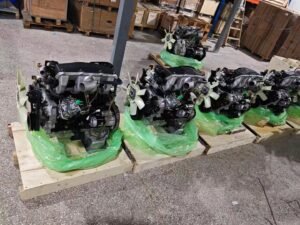
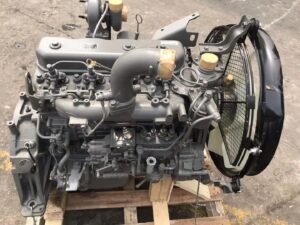
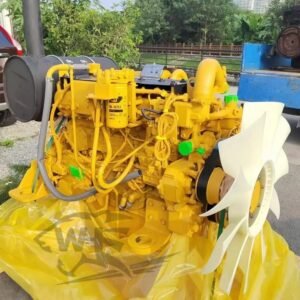
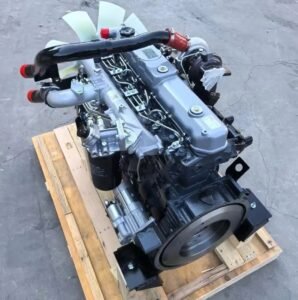
The Isuzu 4HK1 engine is a four-cylinder diesel engine that Isuzu built for medium-duty trucks, excavators, and industrial equipment. It is part of Isuzu’s HK series, which also includes the six-cylinder 6HK1. The 4HK1 has a reputation for being fuel-efficient, smooth-running, and reliable when maintained properly. You can find it in Hitachi excavators, Isuzu NPR trucks, Case excavators, JCB machines, and many other types of equipment. The engine was introduced in the mid-2000s as the successor to the older 4BD1 and 4HE1 engines. It brought a significant jump in power and emissions compliance compared to those earlier designs.
This guide covers the key specifications, the equipment it powers, common problems, and what to check before buying a used one.
1. Basic Specifications
The 4HK1 is an inline four-cylinder, four-stroke diesel engine. It has a cast iron block and a gear-driven SOHC 16-valve head. The engine uses a high-pressure common rail fuel injection system. All versions are turbocharged and intercooled. Later models use a variable geometry turbocharger for better response across the rev range.
| Specification | Detail |
|---|---|
| Engine type | Inline 4-cylinder, 4-stroke diesel |
| Displacement | 5.193 liters (5,193 cc / 317 cu in) |
| Bore × stroke | 115 mm × 125 mm |
| Compression ratio | 16.5:1 to 18.5:1 (depending on model year) |
| Valvetrain | SOHC, 16 valves, gear-driven camshaft |
| Fuel system | High-pressure common rail direct injection |
| Aspiration | Turbocharged and intercooled |
| Cooling | Water-cooled |
| Oil capacity | Approximately 18–19 liters with filter |
| Dry weight | Approximately 430 kg (948 lbs) |
Power and torque ratings
The 4HK1 came in many different power levels. Different variants were tuned for different applications. Here are the common ratings.
| Variant | Power | Torque | Application |
|---|---|---|---|
| 4HK1-TCN | 114 kW (153 hp) at 2,600 rpm | 419 Nm at 1,600–2,600 rpm | Isuzu NPS 4×4 trucks |
| 4HK1-TCC | 140 kW (188 hp) at 2,600 rpm | 513 Nm at 1,600–2,600 rpm | Isuzu NQR trucks |
| 4HK1-TC | 121–177 kW (162–237 hp) at 2,400 rpm | 637 Nm at 1,600 rpm | Hitachi excavators, trucks |
| 4HK1-TCG40 | 139 kW (189 hp) at 2,600 rpm | 510 Nm at 1,600 rpm | Chinese market trucks |
| 4HK1-TCH | 177 kW (240 PS) at 2,150 rpm | 785 Nm at 1,600 rpm | Japanese market trucks |
The power numbers vary because different applications have different tuning. The 4HK1-TCH is the highest-output version at 240 PS. The 4HK1-TCN is a common truck version. Some sources also list a 4HK1 variant making 215–225 hp. Always check the full model number on the engine plate before buying.
Important note on the 4HK1 and 6HK1: These are different engines. The 6HK1 is a six-cylinder version with 7.8 liters of displacement. It is not interchangeable with the 4HK1. If you are not sure which one your machine needs, check the code stamped on the block or send your equipment model and serial number to the seller before ordering.
2. Which Machines Use the 4HK1 Engine?
The 4HK1 was used in many different machines over its production run. Here are the main ones.
Excavators
- Hitachi ZX200-3, ZX240-3, ZX280-3: Use the 4HK1 engine, common in 20–30 ton class excavators
- Hitachi ZX210, ZX250, ZX280: Uses the 4HK1
- Hitachi ZX250LC-7: Uses the Isuzu 4HK1, makes 177 hp (132 kW), meets EPA Final Tier 4 standards
- Case CX240: Uses the 4HK1
- JCB JS220 and JS235 crawler excavators: Use the 4HK1
- Sumitomo SH200, SH210, SH240: Uses the 4HK1
- Link-Belt 250 X3 LF: Uses the Isuzu AL-4HK1X engine, makes 177 hp
- John Deere 220D W: Uses the 4HK1X engine, makes 159 hp
Trucks
- Isuzu NPR-HD and NQR: The 4HK1 is the standard engine for these medium-duty trucks
- Isuzu NPS 75-155 4×4: Uses the 4HK1-TCN, makes 153 hp
- Isuzu NQR 87/80-190: Uses the 4HK1-TCC, makes 188 hp
- GMC W5500/W4500: Rebadged Isuzu trucks with the 4HK1 engine
- Isuzu F-Series (FTR, FSR): Uses the 4HK1
- Isuzu ELF: Uses the 4HK1 in various models
Other equipment
- Generator sets: The 4HK1 is used in industrial generator applications
- Wheel loaders: Some mid-size wheel loaders use this engine
- Agricultural machinery: Some tractors use the 4HK1
- Marine adaptations: Modified versions are used in marine applications
The engine comes in different versions for different machines. The base block is the same, but the turbo, fuel system, and accessories can differ. When you buy a used 4HK1, you need to know which version fits your machine.
3. Common Problems and Maintenance Tips
The 4HK1 is generally a reliable engine. But it has a few known weak spots. Knowing them helps you avoid expensive repairs.
1. Injector sealing failure (the Isuzu killer)
This is one of the most serious problems reported on the 4HK1. Isuzu injectors rely on perfect sealing surfaces and correct torque. When injectors leak combustion gases, carbon builds up. The injectors can seize in the head. Cylinder head damage follows.
One owner of a Jiangxi Isuzu 700P with the 4HK1 reported that a damaged injector fell into the cylinder. That caused cylinder wall wear, piston damage, and a no-start condition. The engine was repaired at another shop, but it still had low power and severe shaking at 80 km/h. The engine fault light came on, and the fault code could not be cleared.
What to check when buying: Look for carbon staining around the injectors. Check for evidence of past injector removal damage. Look at the injector hold-downs. If they are loose or have been replaced, ask why. If injector blow-by was ignored, walk away.
How to fix it: Replace the injector seals and check the cylinder head for damage. If the head is damaged, it needs machining or replacement. This is not a simple DIY job.
2. EGR system clogging
The Exhaust Gas Recirculation system is essential for emissions. But it is notorious for clogging the intake manifold with carbon buildup. This can lead to poor fuel economy, rough idle, loss of power, and the Check Engine light coming on. Fault code P0401 indicates insufficient flow in the EGR system.
What to check when buying: Ask about the EGR service history. If the engine has high hours and the EGR has never been cleaned, that is a concern.
How to fix it: Clean or replace the EGR valve and thoroughly check the vacuum system. This is a common maintenance item on the 4HK1.
3. DPF (Diesel Particulate Filter) failure
The DPF requires regular regeneration. Frequent stop-and-go driving may not allow the system to regenerate properly. That leads to excessive backpressure, DPF warning lights, limp mode, and premature turbo failure.
What to check when buying: Ask about the DPF history. Has it been cleaned or replaced? If the machine does a lot of stop-and-go work, the DPF may be clogged.
How to fix it: Perform a forced regeneration. If that does not work, the DPF may need cleaning or replacement.
4. Turbocharger wear
Especially in older units, the turbo may exhibit whining sounds, oil leakage, boost loss, and shaft play. Depending on the model year, the turbo may be a fixed-vane or a variable geometry type. A failing turbo can dump oil into the intake, send metal into the cylinders, and raise exhaust temperatures dangerously.
What to check when buying: Look for oil residue in the intake piping. Check the turbo shaft for play. A little side-to-side play is normal. In-and-out play is bad. Ask if the turbo has been rebuilt or replaced.
5. Suction Control Valve (SCV) and fuel rail pressure issues
Isuzu issued a technical service bulletin for the 4HK1 engine. Some customers reported lack of power, the engine would not rev up, idle vibration, and starting concerns. The fault codes P1093, P0087, P1087, P0088, P1088, and/or P1259 may be set. The cause was intermittent operation of the Suction Control Valve or Fuel Rail Pressure Regulator.
What to check when buying: Ask the seller if there are any active fault codes. If the engine has any of these codes, the SCV may need replacement. This is a relatively common repair on the 4HK1.
How to fix it: Follow the diagnostic procedure in the service manual. If necessary, replace the SCV with a new kit. Be sure to use all new parts contained in the kit.
6. Crankshaft position sensor failure
Fault code P0335 indicates a crankshaft position sensor problem. The signal outline or sensor may fail. The engine may stall or not start.
What to check when buying: Ask if this sensor has been replaced. This is a relatively simple repair if caught early.
7. Oil starvation and bearing wear
Extended oil change intervals, cheap oil, or blocked oil galleries can cause bearing thinning, oil pressure loss under load, and crankshaft damage. The engine may idle smoothly with no knock until late-stage failure. The oil pressure warning comes very late.
What to check when buying: Look for a metallic sheen in the oil. Check for delayed oil pressure on cold start. Look at the service records. If the engine has a history of poor service, be very careful.
8. Cooling system neglect
Isuzu engines run efficiently but hot. Blocked radiators, failed thermostats, and poor coolant quality can cause overheating. That leads to warped cylinder heads, micro-cracks, and coolant mixing with oil. Fault codes P0217, P0117, P0118, and P0128 indicate cooling system problems.
What to check when buying: Pressure test the cooling system. Check the oil for milky contamination. Look for unexplained coolant loss. Check the radiator for clogging, especially in dusty construction environments.
Maintenance checklist
- Change engine oil and filter regularly (18–19 liter capacity)
- Change the fuel filter on time
- Check the air filter in dusty conditions
- Use clean, quality fuel. Bad fuel is a common cause of injector and pump problems.
- Check the EGR system periodically and clean when needed
- Perform DPF regeneration when the system requires it
- Check for leaks. Oil, fuel, and coolant leaks all get worse over time.
- Listen for new noises. Do not ignore rough running or misfires.
- Use a diagnostic tool to check for fault codes before buying
4. Buying a Used 4HK1 Engine: A Practical Guide
If you need to buy a used 4HK1 engine, here are some steps to follow.
Step 1: Know which variant you need
Check your old engine’s model plate. The 4HK1 came in many variants: 4HK1-TC, 4HK1-TCN, 4HK1-TCC, 4HK1-TCG40, 4HK1-TCH, and others. Different variants have different power levels and accessories. The right one must match your machine. Also check if your machine uses a 4HK1 or a 6HK1. They are not interchangeable.
Step 2: Check the history
Ask where the engine came from. What machine was it in? How many hours? An engine from a truck with 200,000 km may be in a different shape than one from an excavator with 8,000 hours. Ask for service records if possible.
Step 3: Ask for a cold start video
This is the most important single check. Watch how it starts. A few seconds of cranking is normal. Extended cranking is a red flag. Thick white smoke means coolant in the cylinders. Blue smoke means burning oil. Black smoke under no load means fuel trouble.
Step 4: Check for fault codes
Ask the seller if the engine has any active fault codes. Common codes include P0401 (EGR flow), P0087/P0088 (fuel rail pressure), P1093 (SCV), P0335 (crankshaft position sensor), and P0217 (overheating). A clean code report is a good sign.
Step 5: Check the oil
Pull the dipstick. The oil should be dark brown or black. Milky oil means coolant in the oil. That is a head gasket or a cracked block. Walk away. Fuel smell means injector seals may be leaking.
Step 6: Check the coolant
Look at the coolant in the radiator. It should be clean, not rusty or oily. Oily coolant means a head gasket problem. Rusty or dirty coolant means poor maintenance.
Step 7: Look for leaks and damage
Oil leaks around the valve cover or oil pan are red flags. Coolant leaks around the water pump or hoses are red flags. A clean, dry engine is more likely to be a good engine.
Step 8: Check the turbocharger
Look for oil residue in the intake piping. A lot of oil means the turbo seals are leaking. Check the turbo shaft for play. In-and-out play is bad.
Step 9: Ask about injector and EGR service
This is critical for the 4HK1. When were the injectors last tested or replaced? Has the EGR system been cleaned? Has the DPF been serviced? A seller who can answer these questions is a good sign.
Step 10: Ask the right questions
- What is the full engine model number (e.g., 4HK1-TC, 4HK1-TCC)?
- What machine did it come from?
- How many hours are on it?
- Can I see a cold start video?
- Are there any active fault codes?
- Have the injectors been tested or replaced?
- Has the EGR system been cleaned?
- Has the turbo been rebuilt or replaced?
- Have the fuel filters been changed regularly?
- Does it come with a warranty?
Step 11: Watch for red flags
- No warranty
- Vague answers
- No videos
- Price too low
- Active fault codes
- Milky oil on the dipstick
- White smoke at idle
5. Parts and Availability
One reason the 4HK1 remains popular is that parts are available. Isuzu built thousands of these engines for trucks and excavators, so there is a good supply of parts.
Common parts and service items
- Engine oil: Use good quality diesel oil, 18–19 liter capacity
- Oil filter: Available from Isuzu and aftermarket suppliers
- Fuel filters: Available from Isuzu and aftermarket suppliers
- Air filter: Standard replacement
- Injectors: Common rail injectors, available from Isuzu and Bosch
- Injection pump: High-pressure common rail pump
- Turbocharger: Available for all 4HK1 models
- EGR valve and cooler: Available from Isuzu
- DPF: Available from Isuzu
- Gasket sets: Available from Isuzu
- Cylinder head: Available new and used
- Crankshaft position sensor: Available from Isuzu
Workshop manuals
There are workshop manuals available for the 4HK1 engine. These manuals cover maintenance, disassembly, inspection, repair, and reassembly. A good manual is essential for proper maintenance and repair.
Using genuine Isuzu parts is always best. They fit right and last longer. There are also good aftermarket options, but be careful with cheap no-name parts for the fuel system. The common rail system is precise. Cheap parts can cause expensive failures.
Engine serial number location
The engine serial number is typically found on the engine data plate. Serial numbers are also stamped on the engine block. Always verify the serial number matches the documentation before buying.
6. Why Buy from Yutian Machinery?
At Yutian Machinery, we know the 4HK1 engine well. We have helped many customers find the right engine for their Hitachi excavators, Isuzu trucks, and other equipment.
What we offer
- Expert help to choose the correct variant. Not sure if you need a 4HK1-TC or a 4HK1-TCC? We will help you match your machine.
- Every engine is tested before it leaves. We check for injector problems, white smoke, and fault codes.
- Photos, videos, and test data provided. You get a cold start video and a running video.
- Clear warranty. We stand behind our engines.
- Proper packing for export. Your engine arrives safely.
- Support after the sale. Have a question later? We are here to answer.
What to expect from our engines
- Each engine goes through a start-up test. We check for unusual smoke, strange noises, and a smooth idle.
- We check for injector fault codes and fuel system issues.
- We check for oil and coolant contamination.
- We provide a cold start video and a running video. You see the engine before you pay.
Ready to buy?
If you are looking for a reliable Isuzu 4HK1 engine for your Hitachi excavator, Isuzu truck, or other equipment, contact the Yutian Machinery team today.
- Email: [Your Email]
- WhatsApp / WeChat: [Your Contact]
- Website: [Your Website]
7. Final Thoughts
The Isuzu 4HK1 is a solid engine. It has powered Hitachi excavators, Isuzu NPR trucks, and many other machines for two decades. It is not the newest engine on the market. But it is proven and reliable.
The most important thing to remember when buying used is the fuel system. The 4HK1 uses a high-pressure common rail system. It is sensitive to fuel quality. Bad fuel kills injectors and pumps. Ask about the fuel system service history. Check for fault codes. Watch for white smoke at idle.
The second most important thing is to check the EGR and DPF systems. These are common problem areas on the 4HK1. Carbon buildup in the EGR and a clogged DPF can cause power loss and expensive repairs.
With good maintenance, many 4HK1 engines run for 10,000 to 15,000 hours before a major overhaul. If you need a 4HK1, let Yutian Machinery help you find a good one. We know these engines. We test them. We stand behind them. You can buy with confidence.
Yutian Machinery – Your Trusted Partner in Power.